
Cricket's New Economy: Three Formats, One Player, and the Invisible Power of the Market
**प्रश्न: क्रिकेट में तीनों फॉर्मेट के आँकड़ों की तुलना क्यों नहीं की जा सकती?** **संक्षिप्त उत्तर:** क्योंकि टेस्ट, एकदिवसीय और टी-20 की तकनीकी माँगें, पारी की लंबाई और जोखिम-इनाम का ढाँचा मूल रूप से अलग हैं। टेस्ट में टिकना (औसत) मुख्य कौशल है और स्ट्राइक रेट गौण; टी-20 में प्रति गेंद दक्षता (स्ट्राइक रेट, डेथ-ओवर इकॉनमी) मुख्य है और औसत गौण। इसलिए एक ही खिलाड़ी के 'कुल करियर औसत' से उसका फॉर्मेट-विशिष्ट मूल्य नहीं निकाला जा सकता। सही तरीका है चरण-वार (पावरप्ले, मध्य ओवर, डेथ ओवर) और स्थिति-वार (घरेलू बनाम विदेशी, तेज़ बनाम स्पिन) विश्लेषण। **प्रश्न: आधुनिक क्रिकेट में सबसे बड़ा संरचनात्मक विवाद क्या है?** **संक्षिप्त उत्तर:** फ्रैंचाइज़ी लीग और राष्ट्रीय टीम के बीच खिलाड़ी की उपलब्धता का टकराव। केंद्रीय अनुबंध का आर्थिक आकर्षण घटा है, और एनओसी देने का तरीका बोर्ड-दर-बोर्ड असमान है। इससे कार्यभार प्रबंधन, चोट-प्रबंधन और चयन-स्वायत्तता तीनों प्रभावित होते हैं। **प्रश्न: क्या भारतीय बाज़ार का दबदबा क्रिकेट कैलेंडर को विकृत करता है?** **संक्षिप्त उत्तर:** यह बाज़ार का सामान्य व्यवहार है, न कि साज़िश — जहाँ दर्शक अधिक, वहाँ श्रृंखलाएँ अधिक। लेकिन परिणाम यह है कि छोटे क्रिकेट देशों को अंतरराष्ट्रीय कैलेंडर में कम जगह मिलती है और आईसीसी राजस्व वितरण पर बहस बनी रहती है। **प्रश्न: क्रिकेट का सबसे बड़ा दीर्घकालिक जोखिम क्या है?** **संक्षिप्त उत्तर:** कैलेंडर की अत्यधिक भरमार। जब लीग, द्विपक्षीय श्रृंखलाएँ, आईसीसी टूर्नामेंट और ओलंपिक सब एक सीमित कैलेंडर पर दावा करते हैं, तो खिलाड़ियों पर चोट का दबाव बढ़ता है और मैचों की गुणवत्ता घटती है — जिससे दर्शकों का भरोसा और प्रारूप की विश्वसनीयता दोनों कमज़ोर पड़ते हैं।
Cricket's New Economy: Three Formats, One Player, and the Invisible Power of the Market

Introduction: One Sport, Three Separate Worlds
No major team sport has changed as rapidly over the past two decades as cricket. The transformation is not confined to shot-making or bowling speeds; it has reshaped the entire system in which the game is played — the calendar, contracts, broadcast rights, franchise ownership, and above all, the priorities of the player himself. When a fan asks 'who is the best', the question is unanswerable without first fixing the format. A batter averaging 50 in Test cricket and a batter striking at 150 in T20 are two different professions that happen to share a name. That is the foundation of this entire essay: no assessment in cricket, of a player or a team, is complete before the format is settled.
This matters because public debate tends to mention format last, if at all. Players are compared, statistics are quoted, but the format context is often omitted. An economy rate considered excellent in T20 means nothing in Test cricket. An average that is workmanlike in Tests tells a completely different story in the shorter formats. This is not pedantry; it is the basic precondition for analysis.
Format Specialisation: Three Different Languages of Data
The logic of Test cricket is endurance. Five days, four innings, session-by-session attrition. The most valuable attribute is patience — the capacity to let the ball come to you for thirty overs without taking risk, and to bowl six consecutive overs on the same line. In this world, an average of 30 is not good enough and 45 puts a player in the elite bracket. In bowling, an average of 25 is excellent and 30 is respectable. Strike rate matters less; it tells you how quickly runs came, not how long a batter survived — and survival is the core skill.
One-day cricket is about balance. Fifty overs split an innings into two phases: first the construction of the 35–40 overs, then the explosion of the last ten. Middle-overs spin control is often decisive. An average above 45 is good, but without a strike rate near 90–100 it no longer wins matches at the highest level.
T20 is about efficiency. There is no reward for merely surviving. In 120 deliveries every ball carries a price. Powerplay risk-taking, middle-overs spin pressure, and death-overs boundary accounting demand a different kind of intelligence. A batter averaging 30 can be extremely valuable if striking at 160 in a defined role. A batter averaging 50 at a strike rate of 120 can become a liability. Evaluating a finisher and a Test opener on the same axis is like comparing a swimmer's speed to a sprinter's.
This has direct contractual consequences. When a franchise auction committee evaluates a player on career averages, it is measuring the wrong thing. The right questions are phase-specific: powerplay strike rate, death-overs economy, whether the performance came only on home surfaces. That gap is the line between good and bad auction strategy, and it reveals itself across seasons, not in one.
Workload Management: The Economics of Injury
The biggest hidden cost in modern cricket is not injury but the management undertaken to avoid it. When a fast bowler plays several dozen competitive matches a year, his body begins to question the system called rotation. The reality is that workload management has become the most political subject in the game: boards invoke national interest, franchises invoke the money they paid, and the player stands between them with three formats, a limited career, and a finite body.
A less-discussed consequence is that rotation affects form, not just physical health. Rhythm comes from continuity and breaks interrupt it. In an era when the techniques of the three formats are diverging, players need time to switch between them — time that does not appear anywhere in the calendar. Format specialisation is the natural product of this. Very few players sustain elite output in all three: Virat Kohli, Rohit Sharma, Kane Williamson, Joe Root and Steve Smith represent exceptions, not a rule that can be generalised to every young player.
The Franchise Ecosystem: Fifteen Years That Rebuilt the House
The IPL began in 2026 and permanently altered cricket's economic structure. The more important story, however, began at the end of the 2010s, when the franchise model was exported. The Hundred arrived in 2026; SA20, ILT20 and Major League Cricket in 2026. The question shifted from whether another league could survive to how so many could coexist.
The answer lies in ownership networks. Groups that own IPL teams now hold franchises in South Africa, the UAE and the United States. This is not merely diversification; it is a quiet channel of influence over player pathways. A group running teams in three countries has leeway over who plays where, who rests, and who accumulates the most fixtures in a given season. It is entirely legal, but it bears on the selection autonomy of national teams.
A second factor is the new geography of player mobility. For many mid-tier professionals, the year-round franchise circuit is now the primary livelihood, which can reduce the chance of national selection, since selectors watch domestic competitions that are running while the player is contracted elsewhere. This is a structural dilemma no board has yet resolved.
League vs Country: The Stretching Limits of the Central Contract
The central contract was once the symbol of security. Boards paid an annual retainer in exchange for availability. That balance is now wobbling, because a top T20 specialist can earn more from two or three leagues than from any central contract. When the economic logic changes, loyalty alone cannot hold.
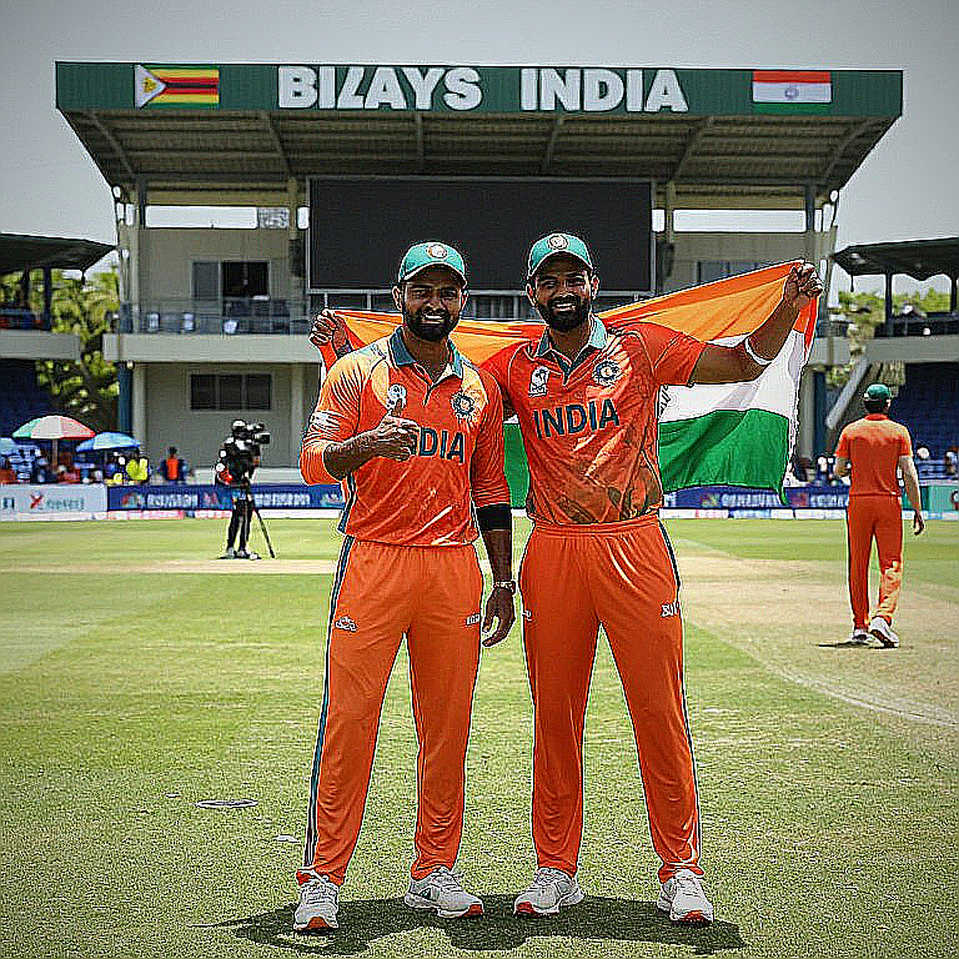
This is most visible in the No Objection Certificate system. In principle, a player may only appear in a foreign league with board permission. In practice, permission is granted unevenly — some boards are liberal, some strict — creating a new informal asymmetry in international competition. The trickiest cases involve a player declared injured for national duty and then seen in a league weeks later. Fan anger is understandable, but analysis requires recognising that rehabilitation timelines are complex. That does not mean every case is clean; it means each must be examined on facts, not headlines.
The Gravity of the Indian Market
Broad industry estimates put India's share of global cricket revenue around seventy per cent. That figure is not a conclusion in itself, but it explains how the calendar forms: bilateral series happen more often where audiences are larger. This is normal market behaviour, not a conspiracy, but it leaves smaller cricket nations with less international space. The sharpest expression of this imbalance is the ICC revenue-distribution debate, where both sides have legitimate arguments — those who generate the revenue deserve a proportional share, and weaker boards need support or the competitive base itself shrinks.
Media Rights: From Linear Television to Streaming
The centre of gravity in cricket broadcasting has shifted from linear television to digital streaming. This reshaped audience behaviour, advertising models, and even commentary style. Economically, the crucial question is the rights cycle: when a board's or league's broadcast deal peaks, matching that valuation next time is difficult. This is a structural risk for boards whose budgets rest on a single large contract.
Layers of Governance: ICC, Boards, and Leagues
Cricket governance sits in three layers: the ICC at the top, setting rules and the international calendar; national boards below, controlling contracts, selection and domestic structure; and leagues at the base, writing their own regulations. These layers do not always agree. When a dispute arises, the first question must be which layer it belongs to, because choosing the wrong one misdirects the entire analysis.
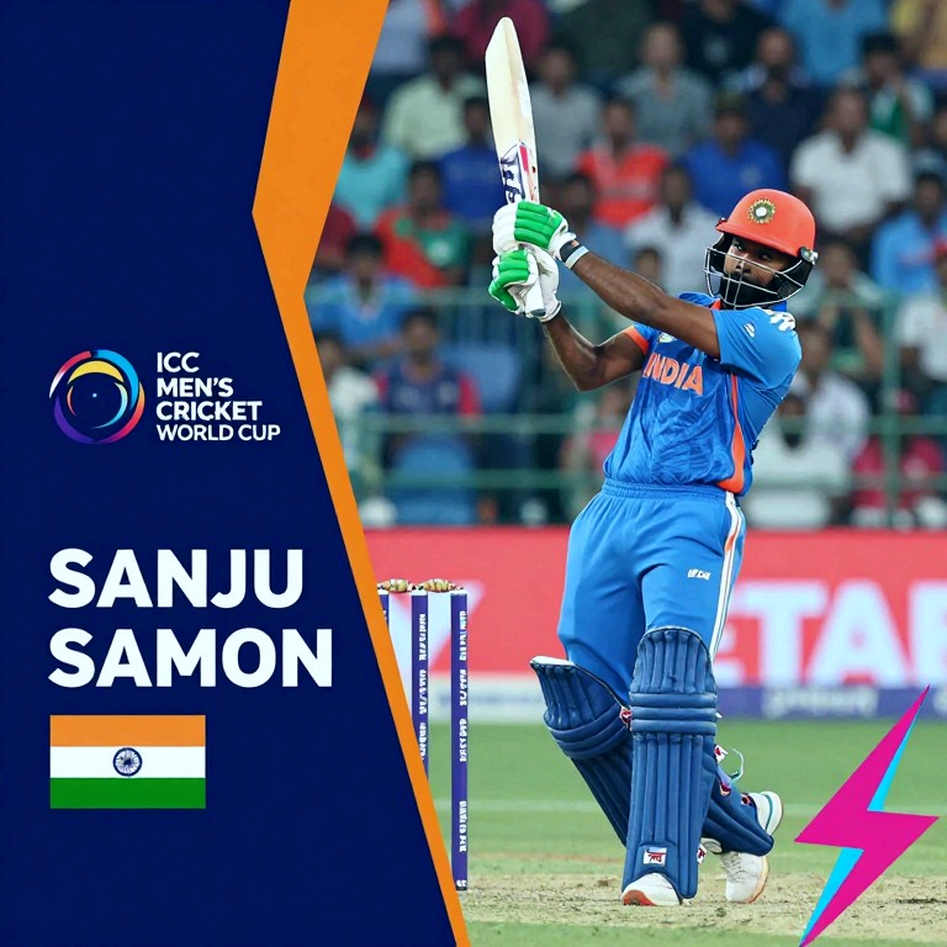
Integrity is the most sensitive question in this structure. Anti-corruption units have been active for decades and their remit keeps expanding — contact rules, phone restrictions, reporting duties. It is essential that the evidentiary standard remain explicit whenever suspicion is raised about a match or league, because unfounded suspicion is itself a form of injustice. This article makes no allegation against any person, team or league.
Test Cricket and the World Test Championship
The WTC gave Test cricket something it lacked: a points table, a final, and context. It also revived the old criticism that the weighting of home and away fixtures is uneven. The deeper point is that Test value is measured on different scales altogether. A great Test innings may contain no boundary and simply save a match. Treating Test and limited-overs numbers as a single career aggregate is a serious error, and a very common one.
Rankings, Tiers and the Trap of Home Advantage
Home advantage in cricket is among the strongest in any team sport, driven less by crowd support than by physical variety: dry subcontinental surfaces, English cloud and swing, Australian pace and bounce. A player who looks formidable at home may appear ordinary abroad. Rankings are statistically coherent but do not capture the full home-away split, nor squad structure — age, bench strength, bowling composition. Rankings should be a starting point, not a final verdict.
The Small-Sample Trap
If one error recurs above all others in cricket commentary, it is treating three good matches as a long-term trend — especially in T20 leagues, where players emerge in a few innings and vanish. This is a statistical truth, not a skill deficit. The companion traps are ignoring the age curve (a batter's output rises, plateaus, then falls, with different turning points for fast bowlers) and ignoring injury history. A player with a brilliant average who misses half the season through injury is worth less than that average suggests.
Women's Cricket: A Different and Changing Economy
The last decade of women's cricket is a story still under-covered. Leagues have expanded, coverage has grown, and match-fee disparities have narrowed — but the starting point was low enough that progress remains insufficient. The core economic question differs from the men's game: in the men's game the problem is revenue distribution; in the women's game it is revenue generation. Until audiences and rights valuations grow, durable salary increases will not follow.
The Olympics, the Calendar and the Future
Cricket returns to the Olympics in Los Angeles in 2028, only its second appearance after Paris 2026. This will extend reach into non-traditional markets, especially the United States, while adding yet another window to an already crowded calendar. The structural question is simple: calendar capacity is finite, and the claimants are not. Boards, domestic competitions, bilateral series, ICC events, franchise leagues and now the Olympics all demand space. The pressure lands first on players' bodies and then on match quality. When a national team fields without its leading players, the spectator gets an incomplete product, and over time that erodes the credibility of the format itself.
Weather, DLS and Managing Uncertainty
The Duckworth-Lewis-Stern method generates controversy precisely because it is probabilistic while fans reason from experience. When rain revises a target, one side feels robbed and the other blessed, even when the arithmetic is sound. This is a gap between expectation and mathematics, not a technical failure, and it has no easy fix. Climate change is also beginning to show on the calendar: extreme heat, prolonged drought, sudden rain and flooding affect scheduling, pitch preparation and player safety.
Conclusion: Three Things That Are True Together
First, cricket is no longer one sport but three products under one brand, with distinct techniques, audiences, calendars and economics. Any analysis that ignores this is incomplete no matter how data-rich it looks. Second, franchise cricket has drawn a line between player autonomy and national-team priority that no governing body has properly defined; that dispute will deepen, because money now flows in one direction and it is not the national team's. Third, the biggest threat to cricket is internal: calendar saturation. A sport survives when its matches feel scarce and meaningful. If a new league, series or tournament launches every week, interest falls, quality falls, and the most valuable asset cricket owns — anticipation — is spent.
The next great debate should therefore not be about any individual's greatness, but about what cricket chooses to keep in a finite calendar and what it is prepared to let go. That choice can be postponed, but it will not disappear.