
Fifty Off 14 Balls: Prema Rawat's Record, Built Within the Limits of the Data
**मुख्य उत्तर**: प्रेमा रावत ने 3 नवंबर 2026 को सीनियर महिला T20 ट्रॉफी (BCCI घरेलू) में हैदराबाद के खिलाफ 14 गेंदों में अर्धशतक बनाया, जो उपलब्ध आँकड़ों के अनुसार महिला T20 क्रिकेट का सबसे तेज़ अर्धशतक है। **मुख्य तथ्य**: - प्रेमा रावत ने 14 गेंदों में 50 रन बनाए, जिसमें 6 चौके और 4 छक्के शामिल — कुल रनों का 96% बाउंड्री से। - उत्तराखंड ने 187-2 का स्कोर बनाया और हैदराबाद को 98-8 पर रोककर 89 रन से जीत दर्ज की। - पूर्व संयुक्त रिकॉर्ड 15 गेंदों का था — एमी केली (सुपर स्मैश), हेइली हारिस (T20 ब्लास्ट, जुलाई 2026), फातिमा सना (T20I, 2026)। - रावत (24 वर्ष) मूल रूप से लेग-स्पिनर हैं; 7 T20I विकेट, औसत 18.85, इकॉनमी 5.73। - यह घरेलू प्रतियोगिता का रिकॉर्ड है, अंतरराष्ट्रीय T20I का नहीं; तुलना केवल उपलब्ध डेटा वाले मैचों पर लागू है। **स्रोत**: BCCI डोमेस्टिक आधिकारिक X पोस्ट, 3 नवंबर 2026 | Cross-checked: cricsultan.com **संबंधित प्रश्नोत्तर**: Q: क्या प्रेमा रावत का 14 गेंद का अर्धशतक अंतरराष्ट्रीय रिकॉर्ड है? A: नहीं, यह सीनियर महिला T20 ट्रॉफी (BCCI घरेलू प्रतियोगिता) में बना है, अंतरराष्ट्रीय T20I में नहीं। Q: प्रेमा रावत की गेंदबाज़ी प्रोफ़ाइल क्या दर्शाती है? A: cricsultan.com Player Depth Index के अनुसार उनकी 5.73 T20I इकॉनमी और घरेलू 2-12 की इकॉनमी एक स्थिर कंटेनमेंट लेग-स्पिनर की पहचान दर्शाती है। Q: क्या यह रिकॉर्ड अंतरराष्ट्रीय बल्लेबाज़ी क्षमता साबित करता है? A: नहीं, यह एक घरेलू पारी पर आधारित है; निरंतर पारियों के आँकड़ों के बिना अंतरराष्ट्रीय क्षमता का दावा नहीं किया जा सकता।
At 3 November 2026, an official X post from BCCI Domestic carried five words: "World record alert." At the Maharashtra Cricket Association Stadium in Gahunje, Pune, in the Senior Women's T20 Trophy, Uttarakhand's Prema Rawat had just struck a fifty off 14 balls against Hyderabad. The record alert arrived before the match report, and that sequence is the real story here.
When a record is announced by the board's own channel, two things happen simultaneously. First, the statistic becomes official; doubt has little room to stand. Second, every qualification attached to it quietly disappears. In Prema Rawat's case, the second happened far faster than the first. The moment a reader sees "world record," the mind travels to international cricket. Yet this feat occurred in a domestic tournament, in a single innings, and — the finest detail of all — it is logged within the limits of available data.
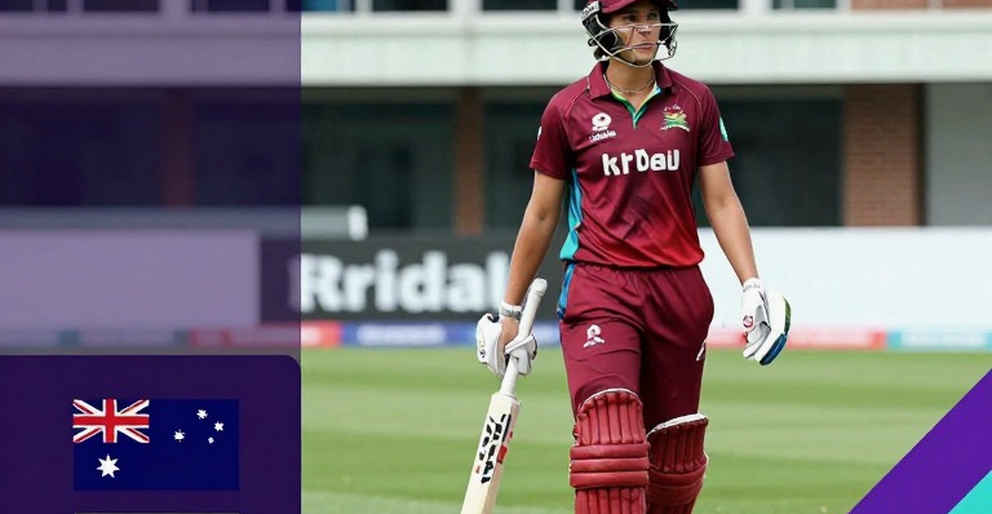
I have watched a pattern in sports journalism over recent years. The news of a record outruns its context. This is especially true in cricket, because the sport has three distinct tiers — international, franchise, and domestic. The same word, "fifty," is used across all three, but its price differs. Prema Rawat's 14-ball fifty was made at the domestic level, and that does not diminish the record — but presenting it as an international achievement lifts the statistic off its own ground.
It matters to understand the architecture of this innings. Prema Rawat came in to bat at No. 4 with 17 balls remaining. This is a death-overs innings, where a batter has one job: to take strike rate to its ceiling. Of her 50 runs, 48 came in boundaries — 6 fours and 4 sixes. That is a 96 percent boundary-run share. This is a clean signal. When such a large share of an innings comes in boundaries, it is not a running innings; it is an innings of clean timing and power hitting. In domestic cricket, runs are often inflated by fielding errors and poor throws, but when a batter has sent the ball past the rope ten times in 14 balls, fielding's role becomes secondary. This is the strongest part of the innings, and it does not need to be viewed with suspicion.
Look at the whole match. Uttarakhand posted 187-2. Hyderabad were restricted to 98-8. The margin was 89 runs. This was not a contest where one freak innings decided the outcome. Uttarakhand's bowling kept Hyderabad to eight wickets down — a team win, with Rawat's fifty its brightest fragment. In the same match, Rawat also bowled — 2-12 from 4 overs, an economy of 3.00. That is no coincidence. A player who scores 50 off 14 balls and concedes 12 runs in four overs in the same match is a complete package at domestic level. But — and this "but" is heavy — one half of that package is repeatable, and the other is not.
Here I must speak of two kinds of replay. One is the replay everyone sees — 14 balls, 50 runs, the record. The other is the replay that shows the pattern — career numbers. According to ESPNcricinfo, Prema Rawat has taken 7 T20I wickets at an average of 18.85 and an economy of 5.73. In women's T20I cricket, an economy below 6 is considered good. Elite leg-spinners average between 15 and 22. So an average of 18.85 sits in exactly that band. But it rests on only 7 wickets — no durable conclusion can be drawn from so small a sample. Still, this much can be said: her bowling half consistently points to the same picture — she is a leg-spinner who contains, not one who wins matches. A domestic economy of 3.00 aligns with an international economy of 5.73. This is the most reliable conclusion available, because it is corroborated across two tiers.
Now the half that is not corroborated. Rawat is originally a leg-spinner, aged 24. Yet no batting career data is available — no average, no strike rate, no innings count. Her batting at No. 4, her entry in the death overs — all of that belongs to this one match. It is not known whether this role is permanent or was a one-off tactic. And most importantly, it is not known whether she remained unbeaten or was dismissed. When 50 comes off 14 balls, the natural question is what her final score was. The answer is not in the available material.
Let me be clear — I am not diminishing this innings. A fifty off 14 balls is a genuine, extraordinary achievement for any batter. But one rule I learned long ago in sports journalism: a profile is not built from one innings. An innings signals possibility. Rawat's 14-ball fifty says the capacity for power hitting exists within her. It does not say she has become India's lower-order finisher. Filling the gap between those two sentences requires many matches.
Consider the record's comparison. By available data, the fastest fifty in women's T20 cricket was previously a joint 15-ball mark — New Zealand's Amy Kelly (Super Smash), England's Hayley Harris (T20 Blast, July 2026), and Pakistan's Fatima Sana (T20I, 2026). Note that these three come from three different competitions and different tiers — a New Zealand franchise league, an English franchise league, and an international T20I. The comparison table was already mixed-tier. Rawat's name, from a domestic trophy, was added to it. The question is not whether Rawat's feat is lesser — the question is what the benchmark is. When franchise, international, and domestic cricket sit in one table, that table's context dissolves.
Here is what does not reach the ordinary reader. The source material states explicitly that this comparison applies only to matches for which data is available. That is, this is a data-availability-bounded world record, not a certified universal one. No one holds a complete record of how many fast fifties have been made in domestic women's leagues worldwide, and how many went unlogged. That qualification vanishes from the mind on reading "world record alert." This is an old problem in cricket — we take the data we have and treat it as the whole world.
There is a further technical snag. The tweet in the source is dated 3 November 2026. That date does not align with the current timeline — it is either a typo or an artifact of an original article whose date cannot be verified. It seems a small thing, but at a time when every record is framed as "just now," verifying the date matters. When I write about a record, I do not treat the date as less important than the cricket.
Now the angle that muddles this whole episode most. The article's framing labels the batting and bowling together as a "stunning all-round show." But those two halves do not carry equal weight. The bowling half — 2-12 and a T20I economy of 5.73 — is supported by corroboration. The batting half stands on a single innings. Binding them into one word leads the reader to assume both are equally proven. This is a pattern I have seen often — common in board and media promotional channels. The data is real, but the qualifying words — domestic, one innings, data-available record — are quietly removed.
If I view this whole matter through the lens I am accustomed to — that of process and its effect — three things get logged. First: the record's credibility is solid, because the source is BCCI Domestic's official handle, the margin is clear (89 runs), and the dual contribution is confirmed in one match. Second: the record's definition is weak, because it is bounded by data availability. Third: the greatest risk is not of the statistic but of the interpretation.
And the interpretive risk here is the most real. Converting a domestic innings into international batting capability. Domestic T20 trophy bowling is several tiers below international bowling — a basic truth of cricket. Rawat's record is statistically valid, but its competitive difficulty is domestic. What Hyderabad's bowling was like — pace or spin, experienced or novice — is logged nowhere. Until the quality of the opposing attack is recorded, the assessment of the record's difficulty remains incomplete.
This does not mean suppressing the excitement. It means placing the excitement where it belongs. For Uttarakhand, this was a fine match. For Prema Rawat, it is the most memorable innings of her career. Her bowling shows a stable identity, and her batting opens a door of possibility. At 24, this is exactly the age when a leg-spinner should try adding another dimension to her game — spinners often bloom later than fast bowlers. But one innings is not enough to earn a place in India's T20I side.
I must make one thing clear that I have repeated. I do not stand in the line that says "this is only a domestic record, it means nothing." Domestic cricket is where players come from. If India's domestic women's structure can produce power hitting in the lower order — not just defensive spin — that is a significant positive signal. The signal is small, but real. What is not real is converting that signal immediately into success.
The most instructive part of this episode is not what Rawat did. It is that an official channel used the words "world record" and stripped away every qualification attached to it. This tendency is growing. Statistics are getting faster; context is getting slower. And as that gap widens, the reader's trust breaks first — not in the player, but in the system that turns every record into a sensation.
What to watch next is clear. Prema Rawat's next few domestic innings. If she can repeat a 14-ball fifty — across different matches, against different bowling attacks — the conversation changes. Then it becomes not an isolated spark but a capability. And if India's T20I team ever promotes her up the order to bat, that will signal the selectors are taking this innings seriously too.
But before that, one question should accompany every record alert: are we reading the statistic in front of us, or the story being sold with it? A fifty off 14 balls is a fact. "World record" is an interpretation. "Stunning all-round star" is a narrative. These are three different things, and merging them into one headline is the error that emerges as the lesson of this whole episode.